June 5th is World Environment Day. You already know what that means for the fashion industry. A flood of fast fashion brands will temporarily turn their logos green and post leaf emojis.
Honestly? Bohot ho gaya dikhaawa (enough of the performative show).
The 2026 theme is “Now for Climate.” Let’s skip the corporate greenwashing and talk about what climate action actually looks like for your wardrobe, our brand, and the future of sustainable fashion in India.
The Eco-Fact: The Dirty Secret of “Stock”
Did you know that roughly 30% of all clothes manufactured by fast fashion brands are never even sold? They go straight from factory floors to landfills. That is a massive, completely avoidable carbon footprint.
This is exactly why Ecothreadly uses a Print-on-Demand (POD) model. We only print a shirt when you actually hit “buy.” It saves millions of liters of water and ensures zero unsold stock is left rotting in a warehouse.
Our Climate Action Plan (The Brand)
We hate greenwashing as much as you do. We aren’t perfect, and our supply chain is always a work in progress. But here is how we are showing up Now for Climate:
- Killing Overproduction: Our POD model ensures we only consume resources for clothes that already have a home.
- Championing Slow Fashion: We design timeless graphics meant to last years, completely ignoring micro-trend cycles.
- Radical Honesty: We are actively working to reduce our shipping emissions, and we promise to keep you updated on the messy reality of running an ethical fashion brand.
Your Climate Action Plan (The Style File)
So, how do you contribute? The most eco-friendly clothing is the stuff already hanging in your closet.
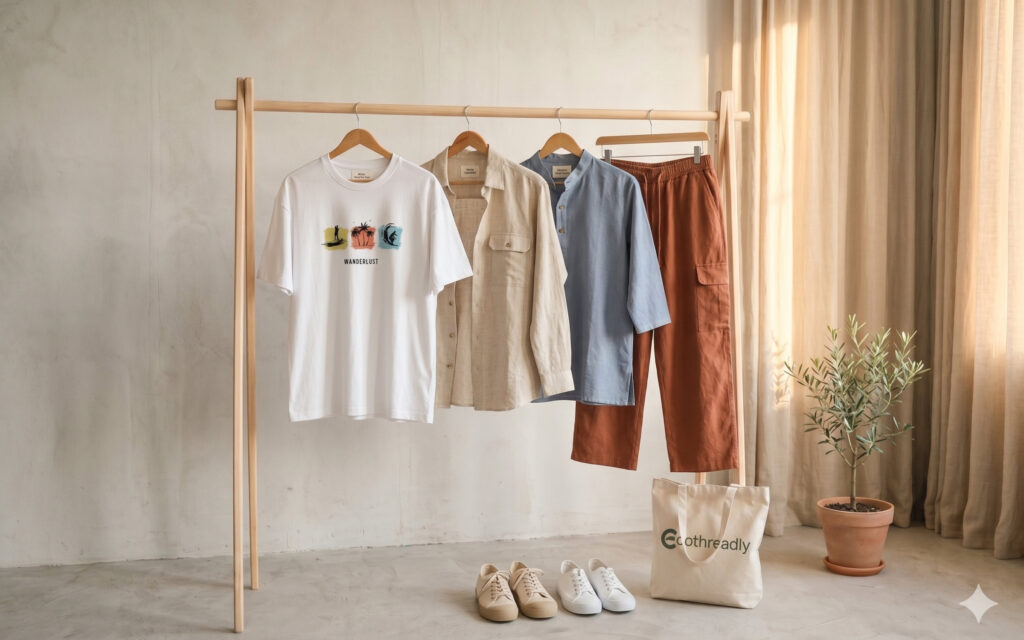
Building an eco-conscious wardrobe means re-wearing your pieces proudly. Here are three effortless ways to restyle your favourite Ecothreadly oversized graphic tee this summer:
- The Indie Coffee Run: Tuck the tee loosely into some high-waisted, vintage thrifted denim. Throw on chunky sneakers and a canvas tote bag. Simple, comfortable, and classic.
- The Office Rebel: Layer your tee under an oversized, unstructured linen blazer. Pair it with tailored wide-leg trousers. It screams, “I care about the planet, but I also have a 2 PM pitch.”
- The Weekend Wind-Down: Wear it loose over ribbed biker shorts with a messy bun and some classic silver hoops. Perfect for beating the Indian summer heat while staying stylish.

The Bottom Line
Building a sustainable closet doesn’t happen overnight. But choosing transparency over mindless consumption is the ultimate flex.
What is your personal climate action plan this year? Tag us on Instagram @Ecothreadly, showing off your favourite outfit repeats using the hashtag #NowForClimate.
SIGN UP FOR A CONSCIOUS FUTURE
Frequently Asked Questions
Wait, what exactly is Print-on-Demand (POD)?
Think of it as made-to-order magic. Instead of printing 10,000 t-shirts and hoping they sell (spoiler: they usually end up in landfills), we only print your shirt the second you buy it. No dead stock, way less water waste, and zero overflowing warehouses.
You mentioned greenwashing. How do I spot it?
Look for vague buzzwords like “eco-friendly” or “green” without any actual data to back it up. If a brand drops a 500-piece collection every week but boasts about a single organic cotton tag… massive red flag. Real sustainability is about transparency and slowing down production.
Isn’t sustainable fashion super expensive?
It can be, but it doesn’t have to be! The most sustainable (and free) clothes are the ones you already own. Re-wearing, thrifting, and clothes-swapping with friends are top-tier climate actions. When you do buy new, think of it as an investment in a piece you’ll wear 50+ times, rather than a cheap thrill that falls apart after one wash.
How do I care for my clothes so they actually last?
Skip the hot water! Wash your tees inside out in cold water and let them air dry (which is super easy in this Indian summer heat anyway). It saves energy and keeps your graphic prints looking fresh for years.